
Germany, 6th Mar 2026 – In the evolving landscape of global finance, few strategists combine academic depth with real-world market execution as effectively as Dietrich Schafer, Known for his rigorous analytical style and macro-driven investment frameworks, Schafer has built a reputation as a strategic architect capable of guiding institutional capital through complex market cycles.
As a leading strategist at Century Investments, Schafer plays a central role in shaping the firm’s global investment philosophy, focusing on long-term capital allocation, macroeconomic risk management, and structural market opportunities across Europe and beyond.
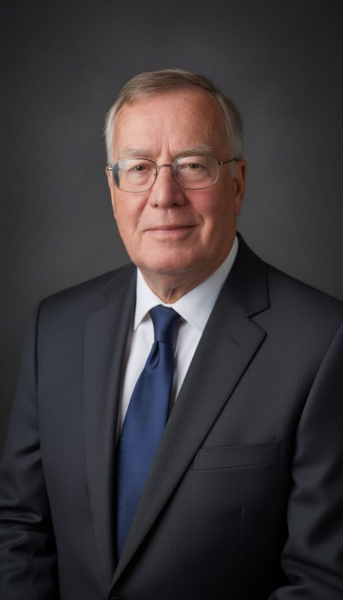
The Academic Foundations of Dietrich Schafer
The intellectual foundation of Dietrich Schafer was built through extensive academic training in economics and finance. He earned his PhD in Economics from Ludwig Maximilian University of Munich (LMU Munich), where his doctoral research explored the relationship between central bank liquidity policies and institutional balance sheet behavior.
His dissertation examined how liquidity stress in financial systems can lead to asset migration among institutional investors. This research gained attention within European financial policy circles for its accurate analysis of institutional fund flows during the Eurozone sovereign debt crisis.
Before completing his doctorate, Schafer obtained a Master’s degree in Financial Economics from the London School of Economics. During this period, he worked on sovereign debt sustainability research, contributing to models designed to evaluate government refinancing risks and long-term fiscal stability. These academic experiences provided him with a strong macroeconomic perspective that later became central to his investment strategies.
From Central Banking to Global Asset Management
Before joining Century Investments, Dietrich Schafer built his professional career within two of the most influential institutions in global finance.
He began at the Deutsche Bundesbank, Germany’s central bank, where he served as a senior analyst within the financial stability division. In this role, Schafer focused on monitoring systemic risks within major European financial institutions, including insurance companies and pension funds. His work involved analyzing cross-border liquidity flows and assessing how financial shocks could propagate through interconnected markets.
One of his notable contributions during this period was the development of a framework for evaluating cross-border liquidity stress scenarios. The model incorporated collateral chains, institutional exposures, and market contagion risks, providing regulators with deeper insight into the stability of European financial networks.
Schafer later transitioned to BlackRock Germany, where he worked within the multi-asset strategy team. At BlackRock, his responsibilities shifted from regulatory analysis to practical portfolio construction. He helped design asset allocation strategies that combined macroeconomic risk factors with market signals, creating diversified portfolios tailored to the needs of European pension funds and institutional investors.
This combination of regulatory experience and market strategy would later define Schafer’s approach at Century Investments.
Dietrich Schafer’s Role at Century Investments
Today, Dietrich Schafer serves as one of the key strategic architects at Century Investments, where he leads research on macroeconomic cycles, asset allocation, and institutional investment frameworks.
Century Investments operates as a global investment research and strategy platform, integrating resources across international capital markets. With headquarters in Frankfurt and networks extending across Europe, North America, and Asia, the firm focuses on long-term value creation through deep research and disciplined strategy design.
Within this organization, Schafer’s role is to translate complex macroeconomic developments into actionable investment frameworks. He specializes in constructing resilient portfolio structures capable of navigating inflation cycles, monetary policy shifts, and geopolitical uncertainty.
His strategic approach often divides investment portfolios into three functional layers: long-term strategic allocations, tactical market rotations, and protective hedging mechanisms designed to mitigate extreme market events.
Research Focus and Investment Philosophy
A central element of Dietrich Schafer’s work is the interaction between monetary policy, institutional behavior, and asset pricing. His research frequently examines how central bank policies influence capital flows and asset valuations across global markets.
He has also developed expertise in tail-risk hedging strategies, focusing on protecting portfolios against rare but severe financial shocks. Rather than attempting to eliminate all volatility, Schafer advocates building investment structures capable of surviving extreme economic scenarios.
Another important aspect of his research involves institutional investor behavior. By analyzing capital flows, positioning data, and market sentiment indicators, Schafer identifies moments when markets become excessively crowded or overly pessimistic. These signals can provide valuable opportunities for contrarian investment strategies.
In addition, Schafer has explored the financial materiality of ESG factors, arguing that environmental and governance risks should be incorporated directly into financial valuation models rather than treated as separate thematic investments.
Strategic Thinking and Advisory Style
Colleagues and clients often describe Dietrich Schafer as an “architect of financial systems.” His analytical style is defined by precision, structured thinking, and an emphasis on logical consistency.
Rather than offering simple predictions about market direction, Schafer focuses on building robust decision frameworks that allow investors to respond effectively to changing economic conditions. His advisory sessions typically involve breaking complex financial questions into interconnected modules, including macroeconomic assumptions, balance sheet structures, and market behavior factors.
This structured approach enables institutional investors to understand not only potential outcomes but also the underlying mechanisms driving financial markets.
Influence on Institutional Investment Strategy
Over the years, Dietrich Schafer has advised a wide range of institutional investors, including family offices, corporate treasury departments, and long-term capital funds. His work often centers on designing resilient capital structures and diversified investment portfolios capable of maintaining performance across economic cycles.
By combining central banking insight, asset management experience, and rigorous academic research, Schafer has become an influential voice in European macro-investment strategy.
At Century Investments, his work continues to shape the firm’s long-term research framework and global investment perspective.
The Continuing Evolution of Global Capital Strategy
As global markets face increasing uncertainty—from geopolitical shifts to evolving monetary regimes—the demand for disciplined, research-driven investment frameworks continues to grow.
Strategists like Dietrich Schafer represent a new generation of financial thinkers who bridge academic research and practical investment strategy. Through his work at Century Investments, Schafer continues to contribute to the development of sophisticated capital allocation models designed to navigate the complexities of modern financial markets.
Media Contact
Organization: Century Investments
Contact Person: Windy
Website: https://centuryinvestde.com/
Email: Send Email
Country:Germany
Release id:42297
Disclaimer: This content is provided for informational purposes only and does not constitute financial, investment, or professional advice. Readers should conduct independent research and consult qualified professionals before making any financial decisions.
The post Dietrich Schafer: The Strategic Architect Behind Century Investments appeared first on King Newswire. This content is provided by a third-party source.. King Newswire makes no warranties or representations in connection with it. King Newswire is a press release distribution agency and does not endorse or verify the claims made in this release. If you have any complaints or copyright concerns related to this article, please contact the company listed in the ‘Media Contact’ section
Disclaimer: The views, suggestions, and opinions expressed here are the sole responsibility of the experts. No Digest Pulse journalist was involved in the writing and production of this article.